
Tomato care guide
Solanum lycopersicum
Also known as: Cherry tomato, Lycopersicon esculentum
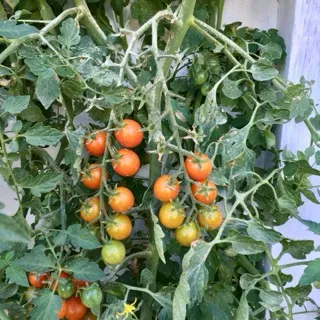
Tomato at a glance
- Watering
- Every 2 days in spring–summer, every 3 days in autumn, every 5 days in winter
- Winter
- It is generally grown as an annual and finished by the first frost; a plant can be kept at a bright window above about 10°C, but low winter light means little fruit.
- Repotting
- Spring–Summer (Mar–Sep)
- Light
- At least half a day of direct sun in an airy spot is about right; rain encourages disease and split fruit, so a balcony or a spot under the eaves, out of the rain, usually suits it.
- Pets and children
- Considered toxic
How often to water Tomato
- Spring–Summer (Mar–Sep)
- Every 2 days
- Water thoroughly once the topsoil dries, as a guide; go a little easy right after planting, and check potted plants every morning in midsummer.
- Autumn (Oct–Nov)
- Every 3 days
- As it cools the soil dries more slowly; as a guide, water about a day after the topsoil dries.
- Winter (Dec–Feb)
- Every 5 days
- Generally out of season outdoors; for a plant kept indoors, water sparingly about two to three days after the soil dries.
Light and placement for Tomato
At least half a day of direct sun in an airy spot is about right; rain encourages disease and split fruit, so a balcony or a spot under the eaves, out of the rain, usually suits it.
Overwintering Tomato
10°C (50°F) or aboveOverwintering guide
It is generally grown as an annual and finished by the first frost; a plant can be kept at a bright window above about 10°C, but low winter light means little fruit.
Fertilizing and repotting Tomato
Fertilizer
Keep the base fertilizer light and start feeding once the first truss has coin-sized fruit, as a guide: slow-release about monthly or liquid feed every two weeks; excess nitrogen gives leaves, not fruit.
Recommended fertilizers
When to repot
Spring–Summer (Mar–Sep)
Common problems with Tomato
- Uneven watering or a calcium shortage causes blossom-end rot, a black patch on the fruit's base.
- Rain or a sudden heavy watering splits the fruit.
- Too much fertilizer or water gives lush leaves, dropped flowers, and no fruit.
Pets and children
Considered toxic
Ripe fruit is not the concern: the leaves, stems, and green fruit hold tomatine; dogs and cats that chew them may vomit, drool, or become lethargic, so keep pets away from the plant and see a veterinarian (or a doctor, for a child) if any is eaten.
Tips for growing Tomato
- Pinch out side shoots while small and train to a single stem for easier care.
- Gently shaking the first flower cluster helps pollination and fruit set.
- Stake the plant and tie the stem loosely so the weight of the fruit does not topple it.
Tomato FAQ
Is Tomato toxic to cats and dogs?
Considered toxic. Ripe fruit is not the concern: the leaves, stems, and green fruit hold tomatine; dogs and cats that chew them may vomit, drool, or become lethargic, so keep pets away from the plant and see a veterinarian (or a doctor, for a child) if any is eaten.
Can Tomato stay outdoors in winter?
It is generally grown as an annual and finished by the first frost; a plant can be kept at a bright window above about 10°C, but low winter light means little fruit.
Why is my Tomato struggling?
Uneven watering or a calcium shortage causes blossom-end rot, a black patch on the fruit's base. Rain or a sudden heavy watering splits the fruit.
These are AI-generated general guidelines. They vary with the variety, the placement and the pot size. For effects on pets or children, consult a veterinarian or a doctor.
Keep your plant log going
Greenery is a free app that keeps your plant care going, with watering reminders and photo records. Available on iOS and Android.

