
Monstera care guide
Monstera deliciosa
Also known as: Swiss cheese plant, Split-leaf philodendron
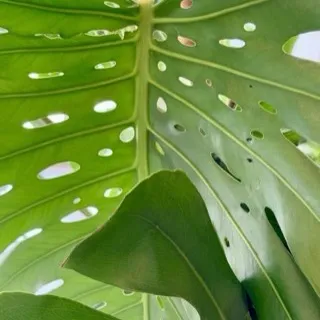
Monstera at a glance
- Watering
- Every 7 days in spring–summer, every 10 days in autumn, every 14 days in winter
- Winter
- 5°C (41°F) or above
- Repotting
- Spring–Summer (Mar–Sep)
- Light
- Bright shade to a window with sheer-curtain light is generally right; strong midsummer sun scorches the leaves, and a dim spot gives leaves without splits.
- Pets and children
- Considered toxic
How often to water Monstera
- Spring–Summer (Mar–Sep)
- Every 7 days
- As a guide, water thoroughly two to three days after the topsoil dries; in midsummer it dries faster, so shorten the gap.
- Autumn (Oct–Nov)
- Every 10 days
- The soil dries more slowly as it cools; wait about three to four days after it dries before watering.
- Winter (Dec–Feb)
- Every 14 days
- Growth stops, so water lightly about a week after the soil dries and keep misting the leaves as a guide.
Light and placement for Monstera
Bright shade to a window with sheer-curtain light is generally right; strong midsummer sun scorches the leaves, and a dim spot gives leaves without splits.
Overwintering Monstera
5°C (41°F) or aboveOverwintering guide
Move it to a bright spot indoors once nights fall below about 10°C; it tolerates around 5°C, but pull it back from the cold glass at night and out of the heater's draft.
Fertilizing and repotting Monstera
Fertilizer
During growth from May to September, give slow-release pellets about every two months or diluted liquid feed roughly every two weeks, and nothing from autumn on.
Recommended fertilizers
When to repot
Spring–Summer (Mar–Sep)
Common problems with Monstera
- Overwatering rots the roots and the lower leaves turn yellow.
- Direct summer sun scorches the leaves, leaving brown patches.
- In a dark room it grows leggy, with long stems and small leaves.
Pets and children
Considered toxic
Leaves and stems hold calcium oxalate crystals; chewing brings mouth pain, swelling, drooling, and vomiting, so keep it out of reach and consult a veterinarian, or a doctor for a child, if any is eaten.
Tips for growing Monstera
- Guide the aerial roots to a stake or into the soil instead of cutting them; the plant steadies and the leaves grow larger.
- Wiping the large leaves with a damp cloth clears dust and lets them catch more light.
- If the stems get too long, cut them back from May to July; the cuttings root in water.
Monstera FAQ
Is Monstera toxic to cats and dogs?
Considered toxic. Leaves and stems hold calcium oxalate crystals; chewing brings mouth pain, swelling, drooling, and vomiting, so keep it out of reach and consult a veterinarian, or a doctor for a child, if any is eaten.
Can Monstera stay outdoors in winter?
It overwinters at 5°C (41°F) or above. Move it to a bright spot indoors once nights fall below about 10°C; it tolerates around 5°C, but pull it back from the cold glass at night and out of the heater's draft.
Why is my Monstera struggling?
Overwatering rots the roots and the lower leaves turn yellow. Direct summer sun scorches the leaves, leaving brown patches.
Articles related to Monstera
These are AI-generated general guidelines. They vary with the variety, the placement and the pot size. For effects on pets or children, consult a veterinarian or a doctor.
Keep your plant log going
Greenery is a free app that keeps your plant care going, with watering reminders and photo records. Available on iOS and Android.

